How business-model-first thinking can slow consumer innovation
One of the first questions people ask me about Roomix, the real estate search engine we're building, is “So, what is the business model?” It's a fair question. A company needs to support itself, investors need a return, and founders also need to pay rent.
What bothers me is when that question takes over before we've talked about what the product could do for people. I find myself explaining how we could charge for something while we're still figuring out what the most useful version of it might be. It's easy to start choosing the version that fits neatly into a pitch deck, just because it's easier to explain.
I don't think founders should build indefinitely and hope money appears later. You need ideas about who benefits, who might pay and how you'll reach them. But I think there's a difference between having those hypotheses and committing to a specific model before you have much evidence of what people want. That's where I worry we're losing a lot of interesting consumer products, especially with AI.
With AI, for example, a familiar starting point is to find a workflow, improve it, turn that into software businesses pay for, and show how it could reach $10M in annual recurring revenue. Plenty of good companies come from that approach. Some of my favorite tools make an existing task much easier, and a lot of important AI infrastructure will probably look like ordinary B2B software from the outside.
The part that concerns me is how often this becomes the model every idea is expected to fit. Predictable pricing, sales cycles and margins make a company easier to evaluate, so there's a reason founders start there. But those choices also shape what they build. You can end up designing around a purchasing process before you've had much room to explore the product itself.
Something similar happens with consumer products. There's pressure to have a subscription and an estimate of how much each user will be worth almost immediately. An idea that might become huge, or might go nowhere, is harder to explain when you don't yet know how people will use it. It can get dismissed before you've had a chance to find out.
I want there to be room for both kinds of companies. Having a few possible ways to make money can help you decide what to test, while locking yourself into one too early can make you reject a useful direction simply because it doesn't fit the model you've already promised.
This is why I keep coming back to Paul Graham's essay “Be Good” and YC's motto, “Make something people want.” I read it as a practical way to give yourself more choices later: build something people care about enough that you have options for how to support it.
Graham uses Craigslist as an example of being “upwind” of revenue. The sailing analogy is that being upwind gives you more control over when to engage. Craigslist had already become a place people wanted to use, so it had room to choose how much money to make from it. That seems like a much better position than trying to sell something people aren't particularly interested in.
He also points to early Google, which went more than a year without ads. Search gave people a reason to come back before AdWords launched in 2000. To me, the useful part of that story is the order: they had something valuable to users and then developed a way to make money around it. Their “Don't be evil” principle also expressed a constraint on the choices they could justify making, which I think matters when a business depends on people's trust.
Of course, Google is an easy example to choose after it worked. There are plenty of products people loved that never became sustainable businesses. I take that as a reason to keep testing assumptions about money alongside the product, while leaving yourself room to change them as you learn. Having users doesn't make those questions disappear, but it gives you something real to work from.
Leaving yourself that room gets harder when you need funding, because you have to explain the business before you've had time to answer all those questions. I don't think this comes down to investors lacking imagination. Some are very comfortable with ideas that don't fit an existing category. What I like about places like Founders Inc. is the room they give people to build before everything fits neatly into a business model.
Still, my impression is that early-stage fundraising often favors a familiar combination: AI, B2B, SaaS and a clear path to recurring revenue. That makes sense when you're trying to evaluate a company, because you can compare its pricing and sales process with businesses you've seen before. A stranger consumer product gives you much less to work with.
The way a fund operates can reinforce that preference. Large funds need to put large amounts of capital to work, own enough of the companies they back, and explain their decisions to the people investing in the fund. A company with a familiar sales process and clear numbers is easier to explain in that context than one that's still discovering what it could become.
My concern is that being easy to explain becomes a filter for what gets built. An idea can look weak through that filter even when there's something interesting happening with the product, and founders notice which kinds of stories get a better response.
Perplexity and Arc are examples of products that caught my attention because they made familiar activities feel different. Perplexity changed how I thought about looking for information, and Arc explored what the browser itself could be. The early versions of products like those are what I want to see more people have room to try, even before the business case is obvious.
There is still capital for ambitious consumer products, and investors willing to take that risk. I just wonder how much room a fund leaves for them if most of its process is built around recognizable business models. If I were on that side of the table, I'd keep asking what part of the fund is available for something like the next Perplexity or Arc while it still looks strange.
From my side, I have to explain why the product is worth pursuing without shrinking it into whatever is easiest to put on a slide. The best conversations I've had with investors leave room for that uncertainty while still asking difficult questions about whether people actually want what we're building.
That's the balance I'm trying to find with Roomix. I want to build a search engine that sets a better standard for finding a home. We launched in Argentina, where tens of thousands of people already use it every month, but the ambition is for it to work in any city. That is still a long way from where we are today.
When I look at how housing search has changed, I mostly see the newspaper listings moving onto a website. There are more filters now, but you're still going through photos, comparing listings and trying to work out which places might suit you. A lot of the experience seems organized around showing and selling listings rather than helping someone make that decision.
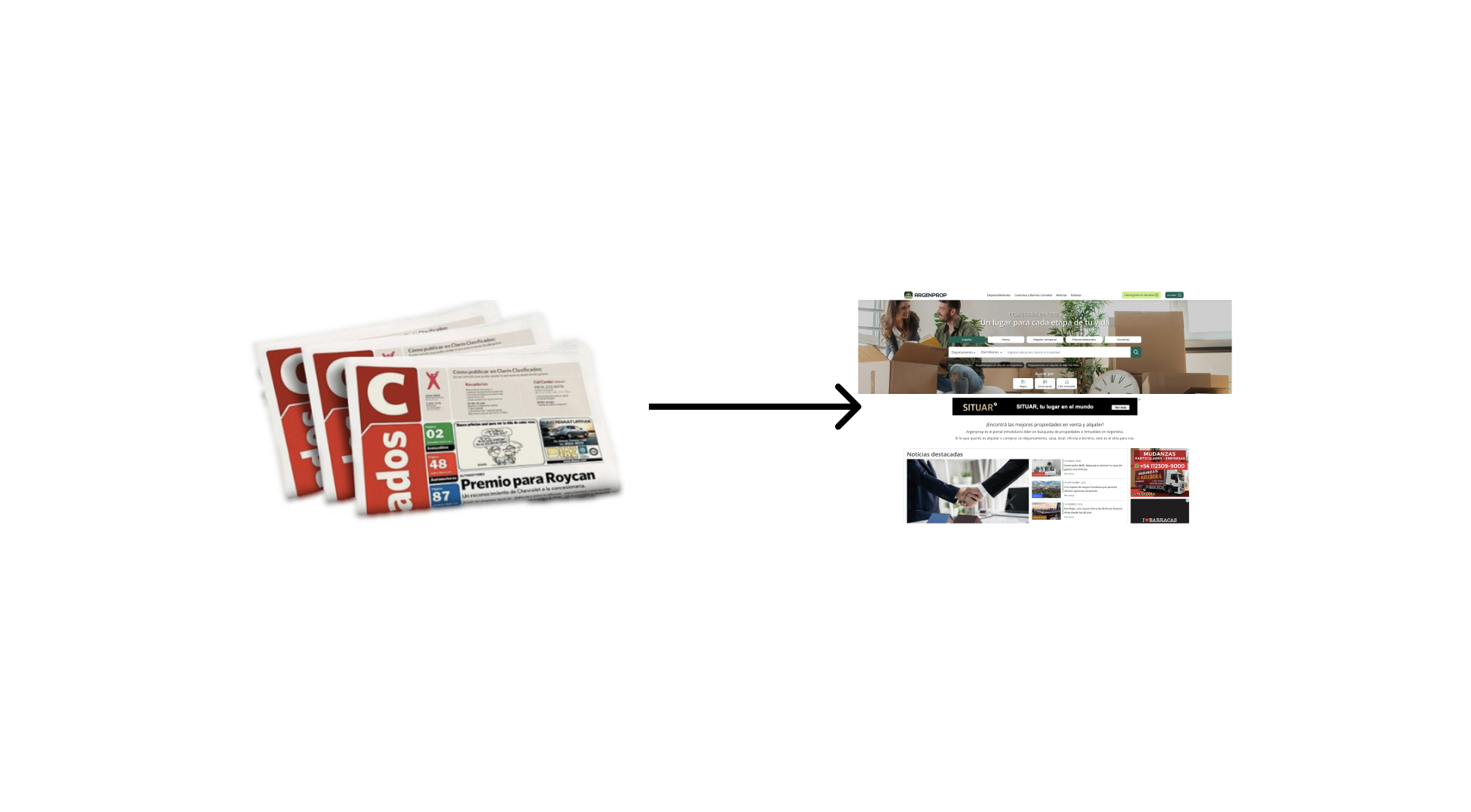
I want Roomix to do more of that work with you: understand what you're looking for, find the homes that fit, and help you understand why they're relevant. That's a different product from a directory where paying more gets a listing more attention, and it's easy to lose that distinction if we decide how to monetize every part of the experience before we've built it.
These are the questions I care about most right now:
- Can we help someone find a place they love faster and with less stress?
- Does it feel like Roomix is on the side of the person searching, not whoever pays us most?
- Can it become the place people start their housing search, in any city?
We already have a few ideas about how the business could work, and we're testing some of them in the background. Real estate has plenty of ways to make money, so I'm optimistic there are options if we build something people really want to use. But we'll still have to find out which ones can support the company without making the search worse.
For now, I think those ideas should help us set limits and decide what to test. If we commit too early to looking like a familiar SaaS business, there's a good chance we'll gradually turn Roomix into another portal, with users treated as leads and search results treated as inventory.
There are already plenty of smart, well-funded teams in real estate. That makes me skeptical that a subscription, a pricing page and a sales team are enough on their own to change how people find a home. I think we have to make the experience much more useful first, and then work out how to keep enough of the value we create to sustain it.
We're starting in Argentina and Latin America, but I want someone in any major city to eventually think of Roomix when they need a place to live. The question I have to answer first is why they would choose it over what they already use. If I can't explain that, a detailed monetization plan won't do much for us.
So when someone asks about the business model, I want us to be able to have that conversation with a product people already care about in front of us. For Roomix, that means helping people find a home, earning their trust, and choosing a way to make money that lets us keep doing that. We need to get specific about who pays, how much and why, but I want those answers to come from what we learn while building the product.
